What is Polyaspartic Floor Coating?
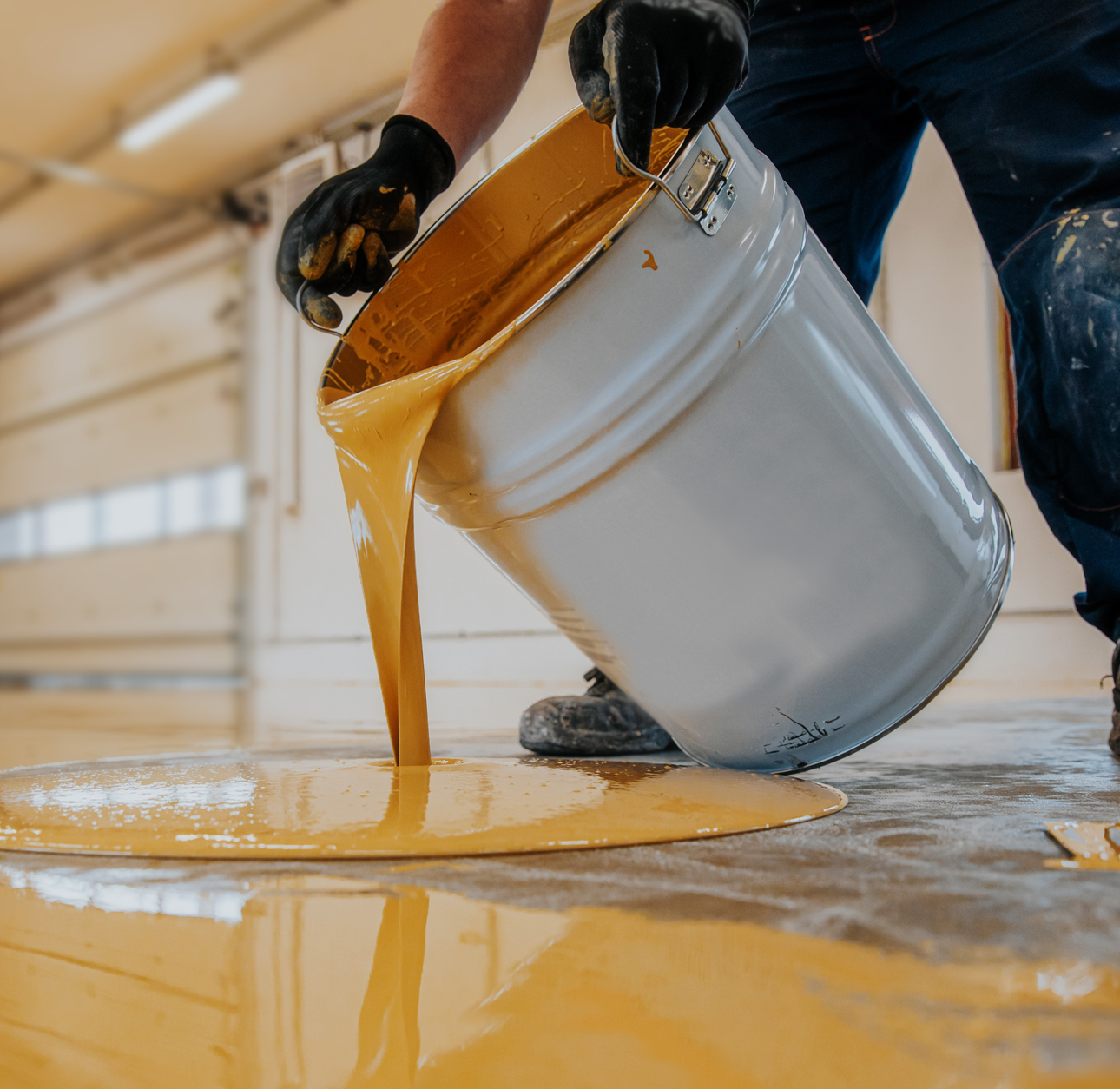
Polyaspartic is a hybrid material that resembles polyurethane. It was first developed in the ‘90s as a coating for steel in bridges and used for its corrosion-resistant properties. This alternative to epoxy is also known as an aliphatic polyurea sealer, which is a mix of ester and other materials.
Manufacturers can change the amount of ester to customize polyaspartic to have different traits, such as quick drying times and limited gas emissions after application. These innovations make it more versatile than traditional epoxy.
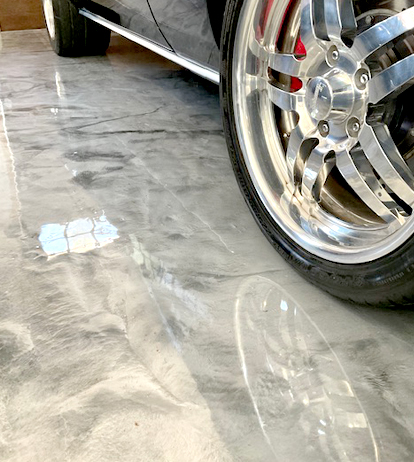
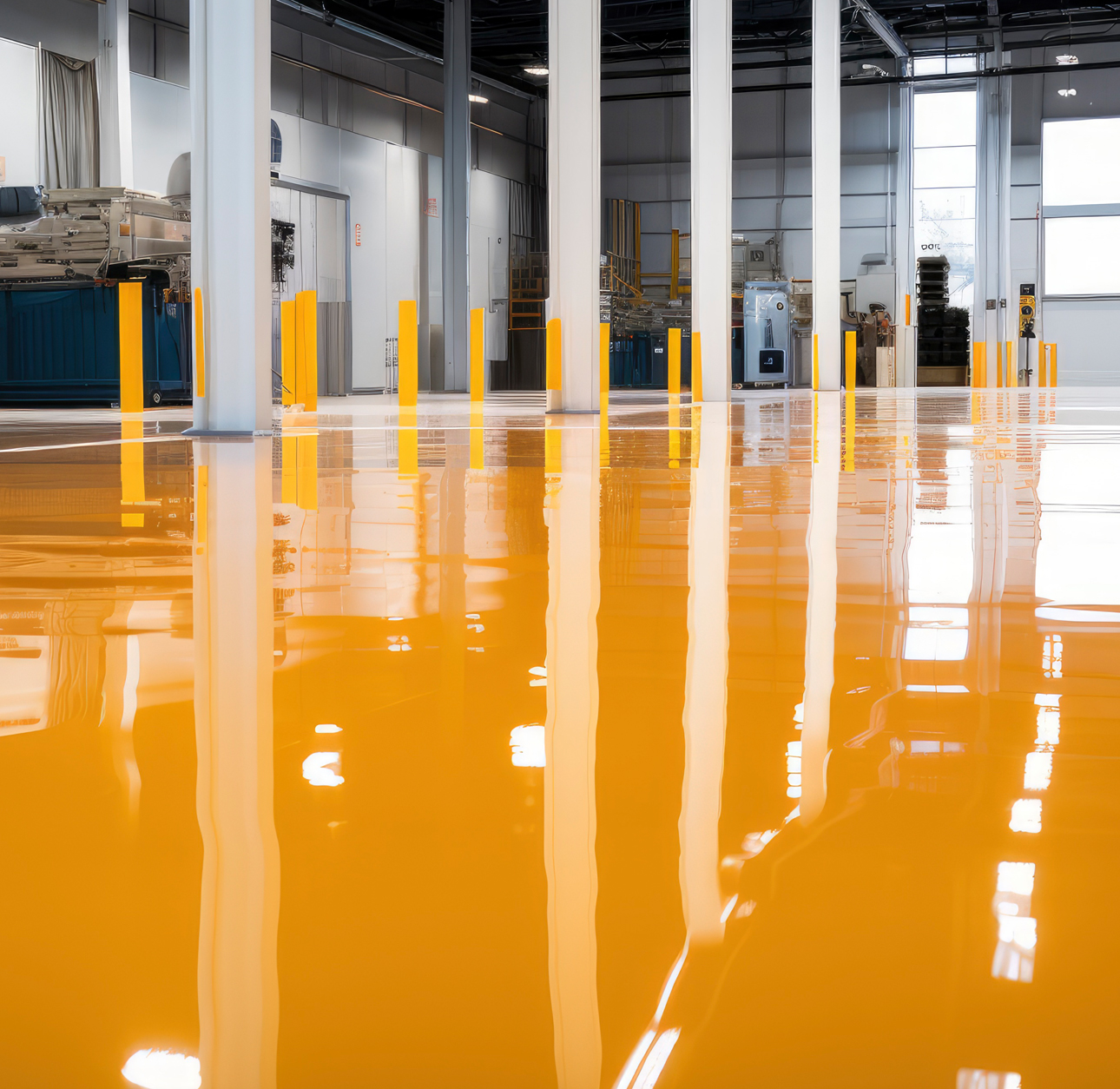
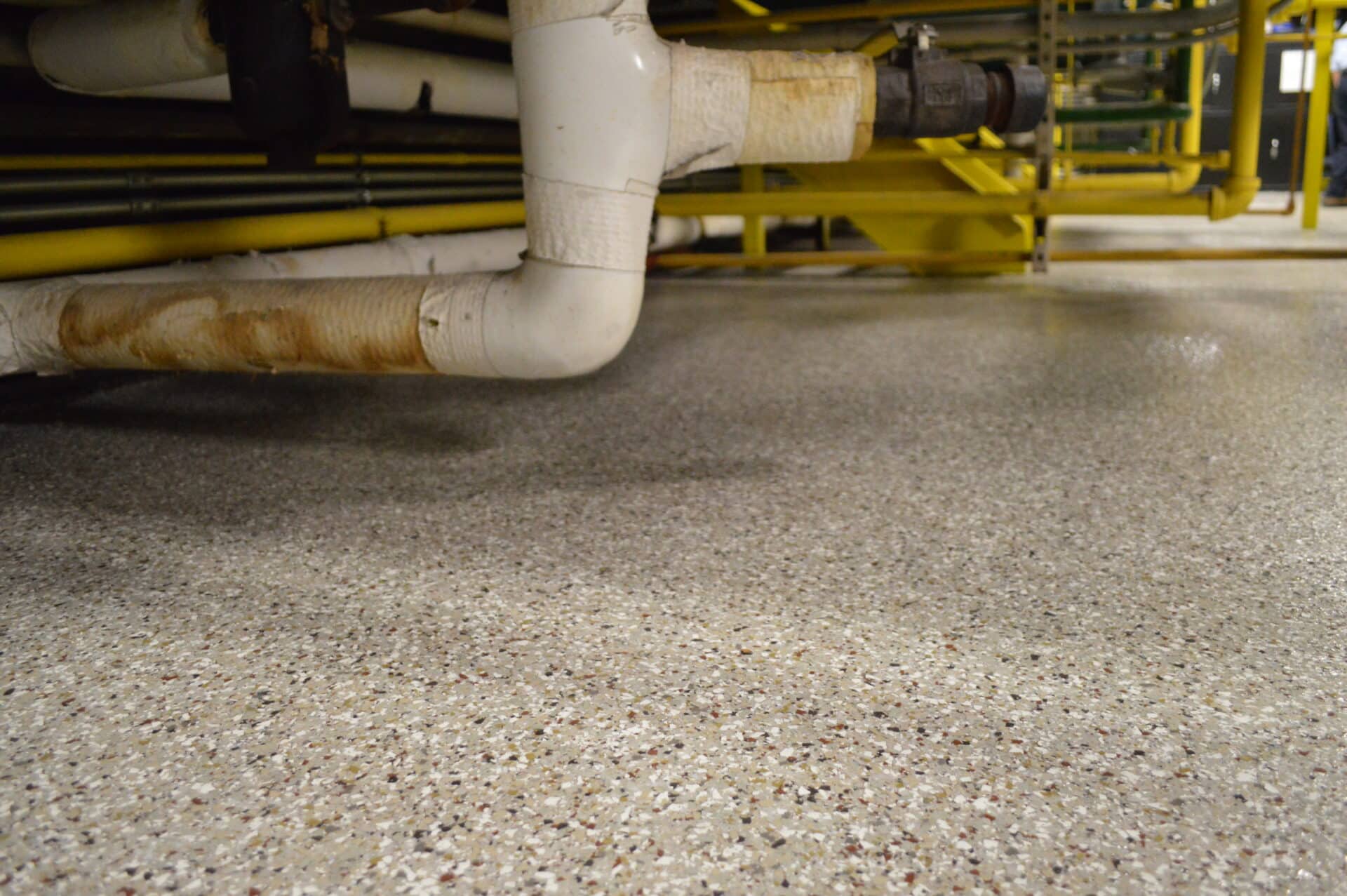
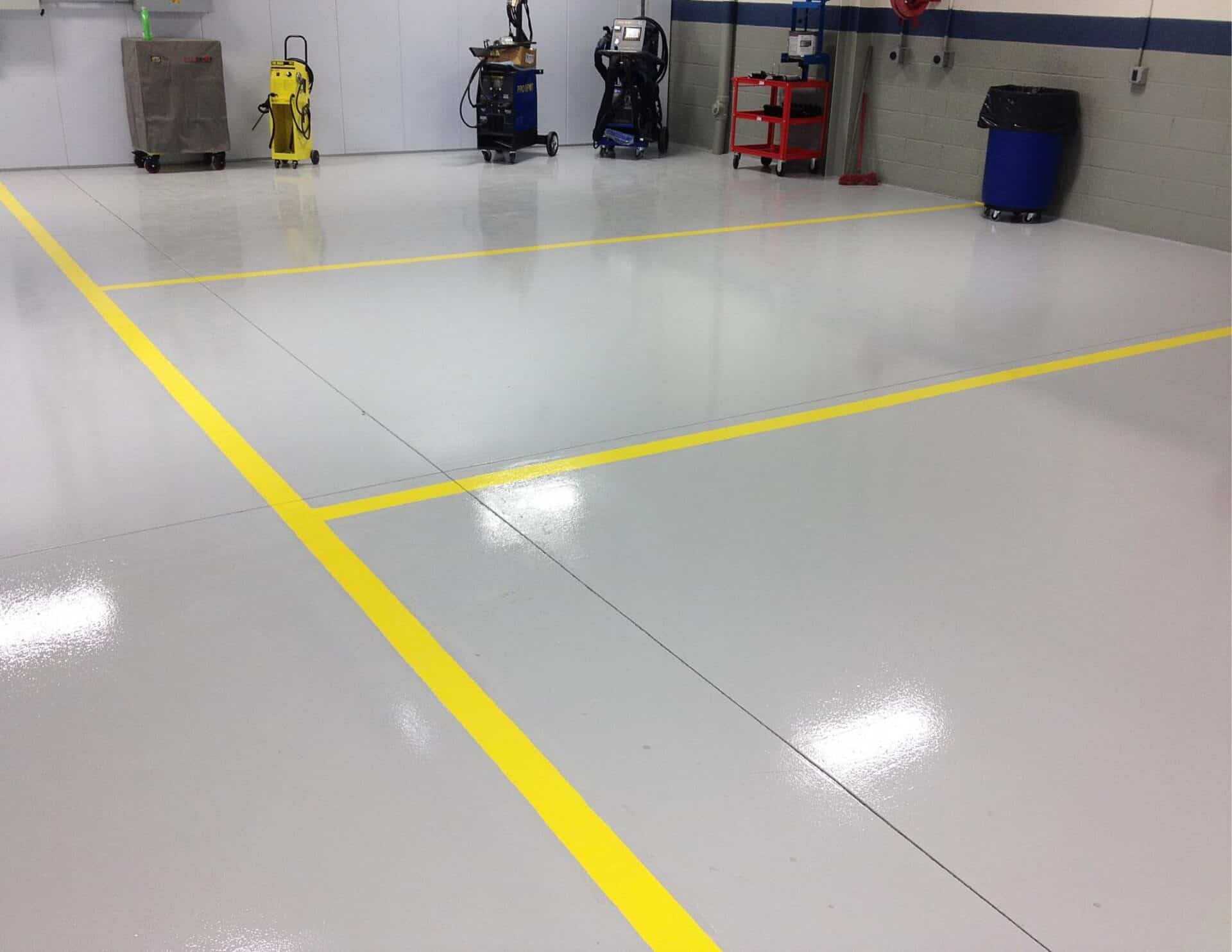
Usually, this coating has a clear, glossy finish. On its own, it creates the look of a wet concrete floor. You can add color to the mixture for a bolder look if desired. Often, people will distribute decorative chips across the surface of a still-wet coating to introduce a bit more color and non-slip texture.
Polyaspartic vs. Epoxy Garage Floor Coating
During your search for the right garage floor coating, you’ve probably come across options for epoxy and a newer product called polyaspartic. These concrete coatings seem similar, so naturally, you want to know the difference. This head-to-head comparison of polyaspartic vs. epoxy will get you all the answers you need
Both options offer durable, attractive coatings that can transform your floors from “blah” to “ta-da!” – but there are still key differences that can inform your purchase. In order to make the right choice between epoxy and polyaspartic, you’ll need to know what they are, where to apply them, and of course, the pros and cons of each.
Advantages:
• Wide choices of blends and finishes
• Can be used as a floor or wall coating (vertical surface)
• Not much maintenance
• UV coating
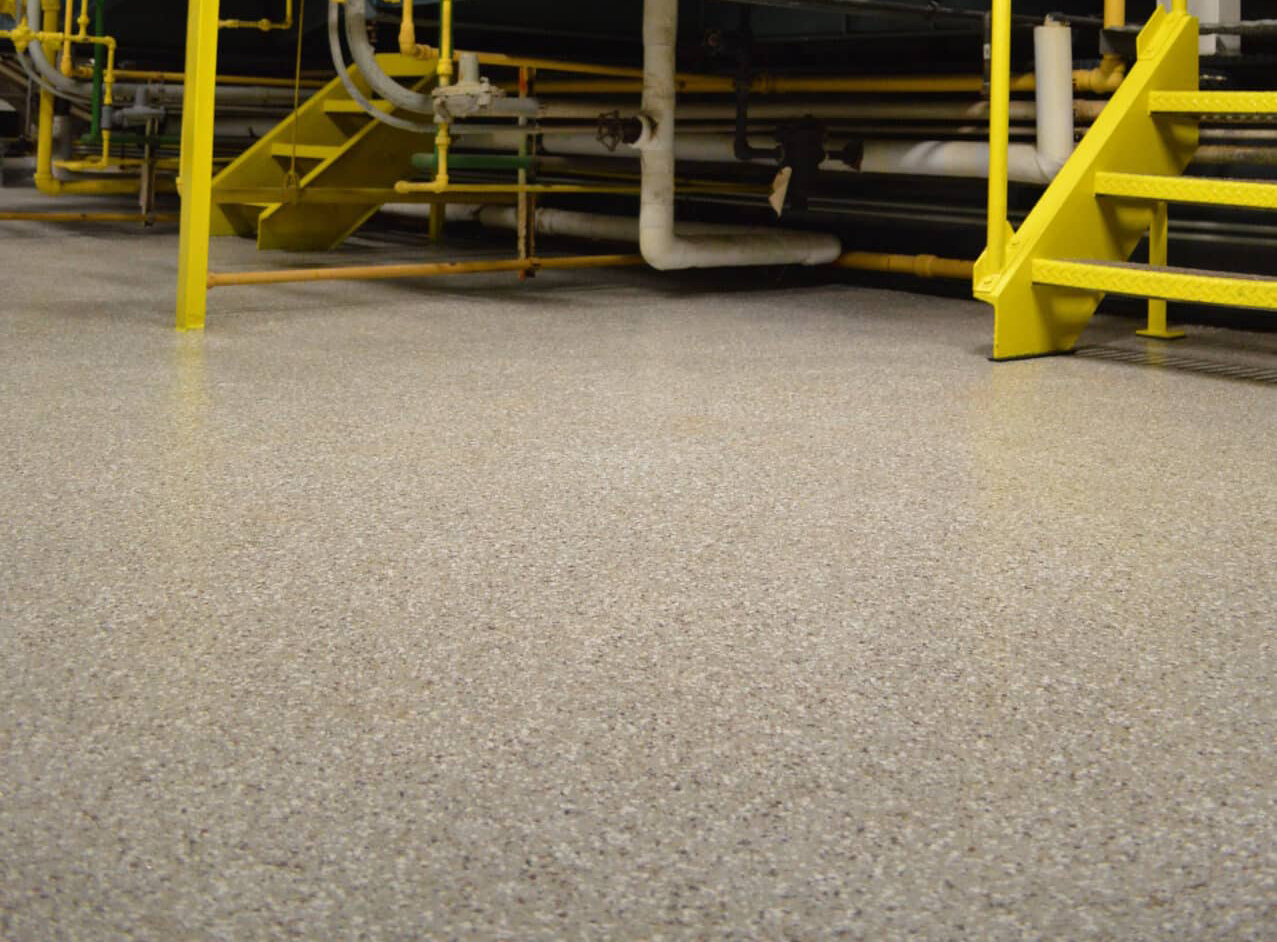
• Contoured finish allows for optimal traction
• No hot-tire pickup
• 1-day installation with next-day return to service with polyaspartic
• All-climate installation, including cold weather
• Superior chemical resistance (gasoline, oil and de-icing salts)